
Happy Sunday, everyone! Let’s get right into it…
1. The importance of classroom libraries
Thanks to everyone for reading and sharing Friday’s blog post, which included three classroom stories from the past week.
One of my friends, Brittany Gendron (@readwritethrive) said it best in a Twitter post earlier this morning: “There are no silver bullets, but there are golden books. Wanting students to read more, raise scores, increase achievement, and change lives? It is this simple. Fund real, recent, authentic books.”
I understand that there are a lot of complex issues in education, issues that will require years, decades to solve. This shouldn’t be one of them.
Every classroom (fine, let’s start with every English classroom) should have hundreds of great books, books that reflect and value all of its readers. Additionally, every student in that classroom should have daily time to select and read and discuss these books.
Will this immediately solve all of our literary challenges? Of course not. But, it’s a great place to start.

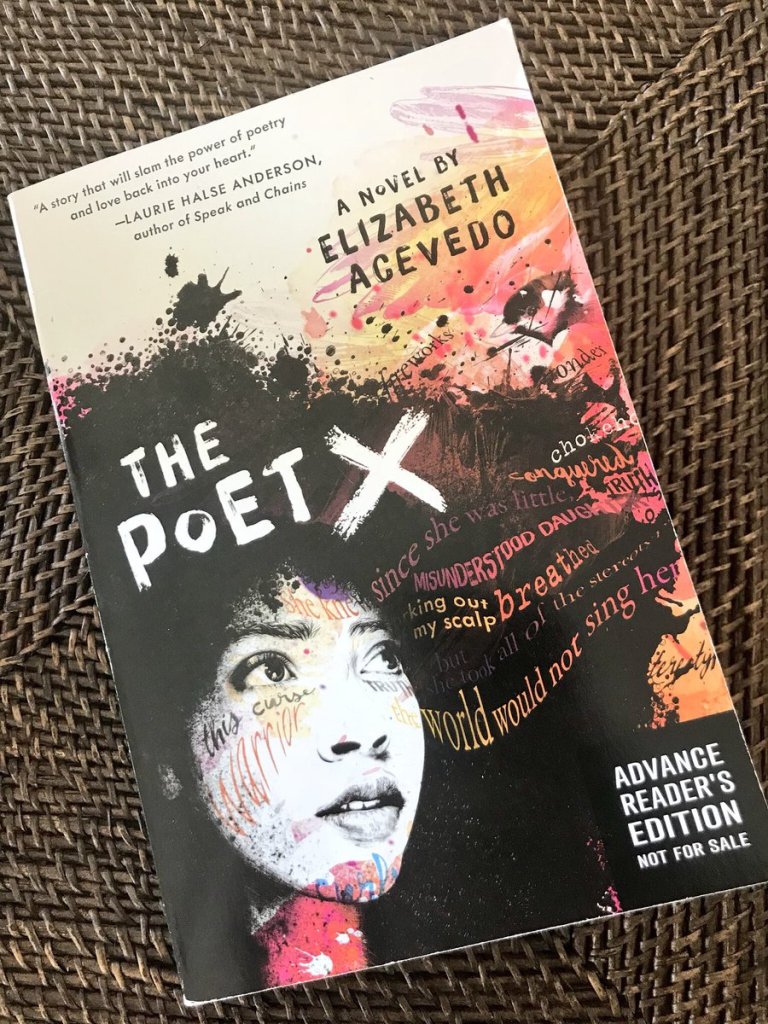
2. Book of the Week: The Poet X
Wow, I haven’t stopped thinking and talking about this book since I finished it in class this week. I had about 20 pages left when our timer went off, signaling the end of our independent reading.
“Guys, let’s keep going for a few minutes.”
And so, as my students happily went back to their books, I raced to finish this beautiful novel in verse while simultaneously wishing that it would never end.
I usually have a hard time ranking books, but I have no problem saying this: The Poet X will be one of the books of the year, and I cannot wait get it into my students’ hands when it’s released in six weeks.
3. Advice for pre-service teachers
This week, I had the opportunity to speak with 50 pre-service teachers at Lipscomb University. My advice? I tried to synthesize all of the advice friends and colleagues shared on Twitter, and because I’m a sucker for alliteration, settled on nine “Ps.”
Purpose – know your “why” so you can block out the noise
Passion – be passionate about your subject, your craft, and your students
Patience – with your students and yourself
People – surround yourself with positive people; seek out mentors
Pause – take time to reflect and journal
Practice – be open to feedback and don’t worry about being perfect, just getting better
Play – don’t forget to have fun and maintain a work-life balance
Plan – for every lesson and for your future
Persistence – don’t give up
 4. As always, students know best
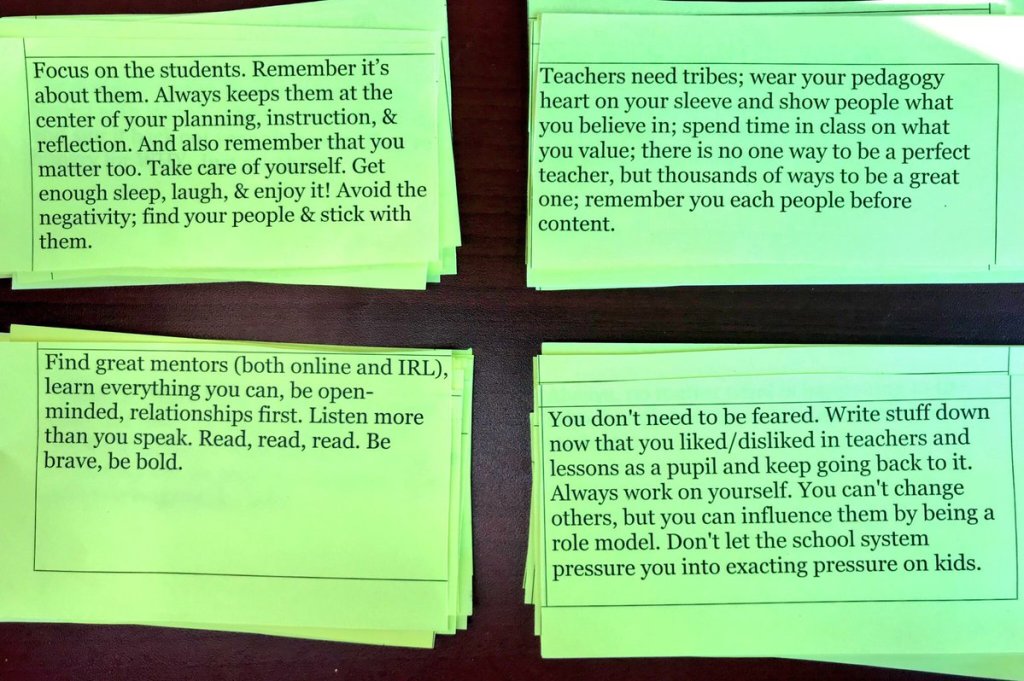
While I spent a few minutes sharing the above advice, the most important tips came from my students. When I asked them to write down what they’d tell new teachers, here’s what they had to say:
 5. Impromptu poetry contest
Looking for an engaging way to end a lesson?
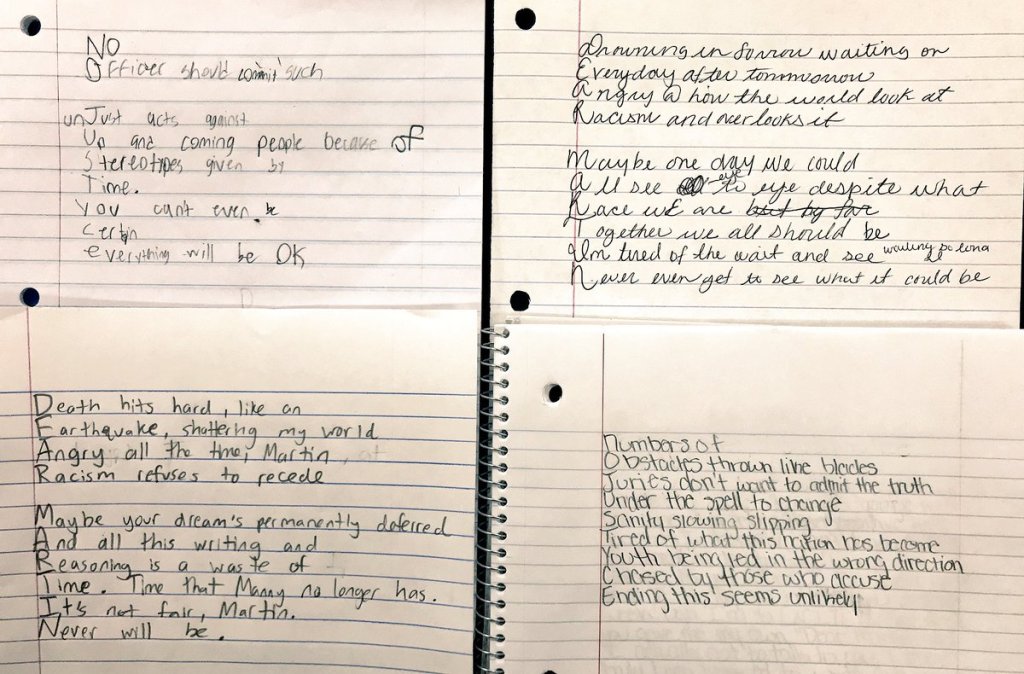
It was fourth block on Friday, and we had about 10 minutes left before dismissal. Students were working in their writer’s notebooks when we decided to host an impromptu poetry contest.
How’d it work? Students wrote either “DEAR MARTIN” or “NO JUSTYCE” down the page and had five minutes to come up with their best acrostic poem. Here’s what we came up with:
 6. Best thing I watched all week
What else can I say that hasn’t already been said? Thank you, Jason Reynolds.
7. Announcements
Nic, see you soon! We can’t wait.

Wishing everyone a wonderful week. Don’t hesitate to reach out (jarred.amato@gmail.com) with any questions or comments! Thanks so much for reading.
 DR. JARRED AMATO